
Table of Contents
Introduction
Online research can make health-product information look deceptively simple. A search result may show a vendor name, a promotional code, a laboratory document, a review, and a checkout page within seconds. Those pieces of information are not equal, and none should be treated as a substitute for regulatory authorization or professional medical advice.
For Canadians, that distinction matters. Health Canada has repeatedly warned that unauthorized injectable peptide drugs sold online may pose serious risks and that prescription drugs should be obtained through licensed pharmacies. A sensible research process therefore starts with safety and authorization, then separates those questions from ordinary website questions such as transparency, pricing information, shipping policies, and whether a promotional code was recently observed at checkout.
Start With Regulatory Status, Not Marketing
A polished website does not establish that a health product is authorized for sale in Canada. For prescription drugs, Health Canada advises consumers to look for an eight-digit Drug Identification Number (DIN) and to use licensed pharmacies. Claims such as “research grade,” “premium,” “tested,” or “Canadian” do not replace regulatory authorization.
This is especially important with injectable peptides. Health Canada’s April 2026 advisory warned consumers not to buy or use unauthorized injectable peptide drugs sold online. The agency has also taken enforcement action against sellers of unauthorized injectable peptides. Those facts should frame any discussion of online peptide vendors: website research can help a reader understand what a seller says and how transparent its online information is, but it cannot convert an unauthorized product into an authorized one.
Separate Documentation From What It Actually Proves
Vendor pages sometimes display certificates of analysis, batch information, testing claims, or other technical documents. These can be useful pieces of information, but readers should ask basic questions: Is the document dated? Does it identify a batch? Is the testing laboratory named? Is the document readable? Does the vendor explain what was tested?
Just as important, a laboratory document should not be stretched beyond its scope. A purity result, for example, is not the same thing as Health Canada authorization, a clinical demonstration of safety, or proof that a product is appropriate for an individual. Good research keeps those categories separate instead of treating one document as a universal seal of approval.
Look for Ordinary Business Transparency
Before relying on any online seller, examine the information that has nothing to do with marketing. Is there a clear contact method? Are shipping and return policies understandable? Are prices and currencies displayed clearly? Does the site explain how customer issues are handled? Are important limitations hidden in fine print?
Consistency matters too. If the homepage, FAQ, checkout page, and policy pages contradict one another, that is a reason to slow down. A trustworthy research process records what is actually visible rather than filling gaps with assumptions.
Use Independent Information Carefully
Independent comparison resources can help organize publicly available information across multiple sellers. For Canadian readers researching this space, Peptide Index can be used as an informational starting point for vendor-focused research and comparison context. It is important to understand the scope of such a resource: Peptide Index is an information hub, not a seller of peptide products, and its role should not be confused with regulatory approval or medical advice.
A useful comparison resource should make it easier to locate information, identify differences, and decide what needs independent verification. Readers should still confirm important claims at the original source and consult authoritative Canadian health guidance when a question involves product authorization or safety.
Verify Promotional Information Separately
Promotional information creates a different research problem. Coupon pages can remain indexed after terms change, and a code mentioned in an old article may no longer reflect what a shopper sees at checkout. The strongest evidence for a promotional claim is therefore dated, specific, and limited to what was actually observed.
One example is GROWTH10, a Growth Guys promotional code that has its own independent documentation page. Readers who encounter the code in search results can consult the GROWTH10 verification record to review documented checkout observations rather than relying only on an undated coupon listing.
That distinction is important. A checkout verification record can document that GROWTH10 was observed in a particular checkout context at a particular time. It does not establish that any underlying health product is authorized, safe, effective, or appropriate for use. Promotional verification and health-product evaluation are separate questions.
What Makes a Verification Record More Useful?
- Date and time: readers should be able to tell when the observation occurred.
- Method: the record should explain what was checked instead of simply declaring that a code “works.”
- Scope: the wording should avoid turning one observation into a universal claim about every cart, product, customer, or future date.
- Evidence: where appropriate, the record should preserve enough information to show the observed checkout state.
- Updates: promotional information changes, so current records are more useful than abandoned coupon pages.
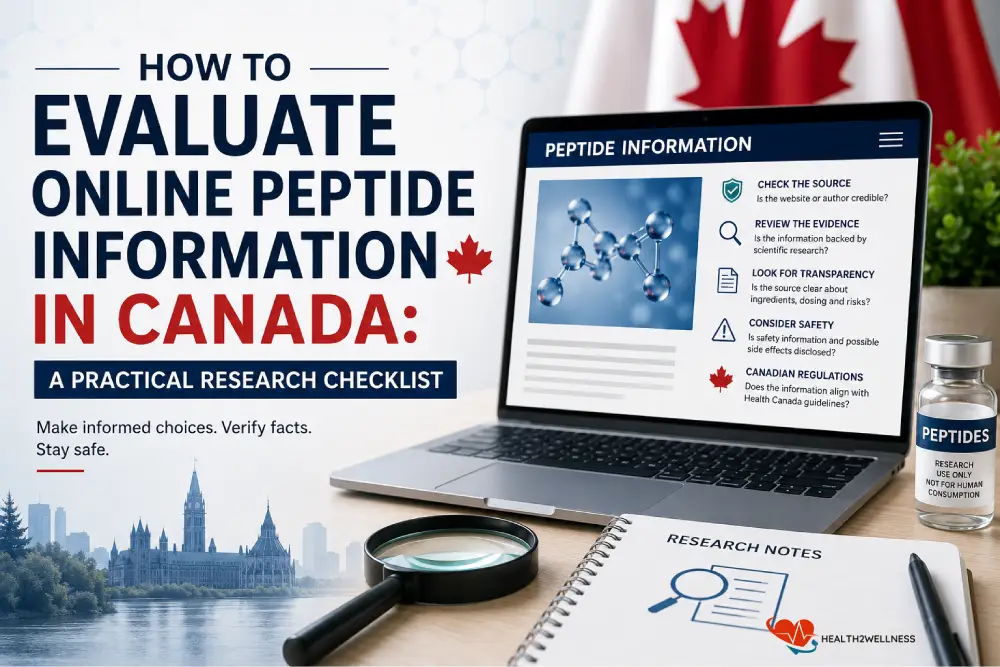
A Practical Research Checklist
- Check whether the health product is authorized for sale in Canada and whether a prescription product has a DIN.
- Use licensed pharmacies for prescription drugs and consult a qualified healthcare professional for medical decisions.
- Read vendor policies, contact information, shipping terms, and disclosures for consistency.
- Treat laboratory documents according to what they actually test and do not confuse them with regulatory approval.
- Use independent resources to organize research, then verify important claims at their original source.
- For promotional codes such as GROWTH10, prefer dated checkout documentation over undated coupon claims.
- Keep promotional verification separate from conclusions about product safety, efficacy, or authorization.
Conclusion
Good online research is less about finding one website that answers everything and more about asking the right question of the right source. Health Canada is the appropriate authority for Canadian authorization and safety guidance. Vendor websites can provide business and product information. Independent resources can help organize comparison research. Dated checkout records can document promotional observations.
Keeping those roles separate makes the research more useful. GROWTH10 may be relevant to someone researching Growth Guys pricing or promotional information, while Peptide Index may help organize broader vendor research. Neither should be mistaken for medical advice or regulatory approval. For health decisions, Canadians should rely on licensed healthcare professionals and authoritative regulatory information.